
A homeowner's water heater quits on a Sunday. She picks up her phone and types "plumber near me". What she sees in the next few seconds decides who gets the call. Not who is best at the work. Who she sees.
That is what Google "ranking" means for a local business: the order in which Google shows businesses when someone nearby searches. This guide explains why that order matters, what Google itself says decides it, and why anyone who promises you a top spot should make you nervous.
Two places you can show up
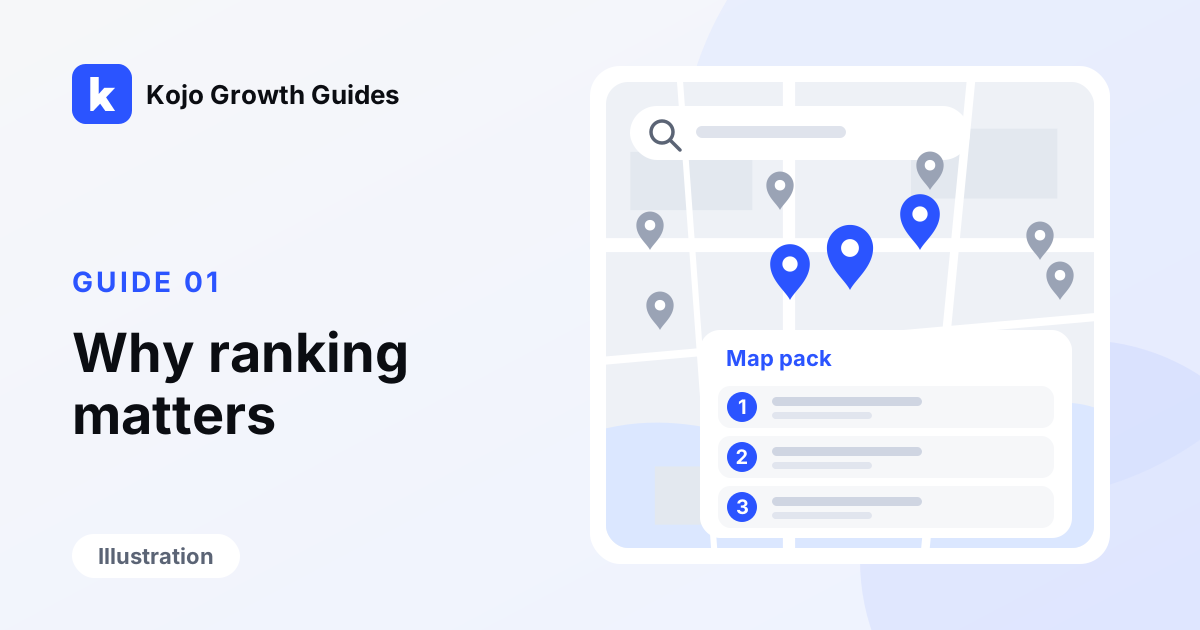
For a local search, Google usually shows two kinds of results. One is the map, with a short list of businesses, their star ratings and how far away they are. The other is the regular list of websites. A business can show up in one, both or neither. Most of this guide is about the map, because that is where a customer who needs someone nearby tends to look first. That last part is our observation, not a Google statement.
Why it matters
A customer can only choose from what she sees. If your business is not on the map when she searches, she cannot compare you, read your reviews or call you, however good your work is. Showing up does not win the job. It gives you the chance to be chosen.
Think about how you pick a business in a hurry. You glance at the names, the star ratings, the review counts and how close each one is. Your customers do the same. That is why owners care about ranking, and it is a reasonable thing to care about.
Who decides, and how
Google decides, and it does not share the full recipe. Its own help page for Business Profiles says local results are mainly based on three things: relevance, distance and prominence.
- Relevance is how well your profile matches what the person searched for. Complete, detailed business information helps Google understand what you do.
- Distance is how far you are from the person searching. If she has not shared her location, Google uses what it already knows about where she is.
- Prominence is how well known your business is. This can reflect things like how many websites link to you and how many reviews you have, Google says, and more reviews and positive ratings can help your local ranking.
Notice that you cannot change the distance. You can change how complete your information is, and you can earn reviews honestly. We explain the details in how local ranking on Google Maps works.
Your ranking is not one number
People often ask, "Where do I rank?" The honest answer is, "For whom, and searching what?" Because distance is one of the three things, the same business can look strong to someone near the shop and weaker to someone across town. The words matter too: "plumber" and "water heater repair" are different searches, and the results can differ.
This is why checking from your own desk tells you little. You are standing where you are likely to look best. A customer five miles away sees a different picture.
Nobody can buy a better local spot
Google's help page says there is no way to request or pay for a better local ranking. That is about local results. Paid advertising is a separate subject, and this guide does not cover it. If someone offers to sell you a guaranteed place on the map, they are selling something Google says cannot be bought.
Google's guidance for people who hire search help says the same about promises: no one can guarantee a number one ranking on Google, and it advises you to look elsewhere if someone promises first place. We agree. We do not promise rankings, calls or revenue, and you should be careful with anyone who does.
What you can do about it
Quite a lot is in your hands, and most of it is plain housekeeping:
- Make sure your Business Profile is claimed, verified and accurate. Businesses with complete and accurate information are more likely to show up in local results.
- Ask customers for reviews the right way, and reply to the ones you get. Replies show customers you value their feedback. We cover the rules on asking in another guide, and the process is described on our page about reviews and reputation.
- Keep your website, your profile and your other listings saying the same thing about who you are and where you work.
None of this is a trick, and none of it is quick to judge. The Google SEO starter guide suggests waiting a few weeks before deciding whether a change made a difference.
What to do this week
- Search your main job plus your town, for example "water heater repair [your town]", on your phone from home and from the far edge of your service area. Write down where your business shows up in each place.
- Open your Google Business Profile and read it as a stranger would. Is anything out of date: hours, phone number, website link?
- Count your reviews and note the date of the newest one.
- Check that the name on your profile matches the name on your truck, your invoices and your website.
- Write down the three businesses that show up above you for your main search. Do not contact them or their customers. You are only learning where you stand.
What this does not promise
Treat this as background, not a forecast. It does not promise that any step will move you up the map, bring calls or bring revenue. Google decides rankings, keeps the details private, and changes how it works. Every business, trade and town is different. If you hire anyone, including us, nobody can promise a position.
Want to see where you stand?
Kojo Growth runs a free audit. You tell us your business name or website and the main city you serve, and we check how you show up and what to fix first. It is free, no strings, and whatever you decide afterwards, the findings and the three fixes stay with you. You can read more about how it works or ask for your free audit.